Tuesday, 24 September 2013
T11: Music Channels
Most modern-day TV music channels have adapted in the way modern technology has. They started off only making music videos, however now they air TV programmes on the same channel - therefore making the channels more popular and entertaining for their target audience. All of these music channels are suitable for the genre of our music video, and would show music videos similar to ours. They mostly show chart music and popular songs that the majority of the public will know. Some of these music channels can also be accessed through their websites:
MTV - http://www.mtv.co.uk/
The Box - http://www.thebox.co.uk/
VIVA - http://uk.viva.tv/
4Music - http://www.4music.com/

T10: Inspiration and Influences - Evidence
I used Blendspace to showcase all the styles/inspiration that I am interested by and what I would want to include in my music video. I added in style icons like Taylor Swift as our leading singer is blonde and we'd want to make her look similar to Taylor Swift as most teenage girls look up to her. I added in her music video 'Love Story' as it includes the love scene narrative that I am looking for and want to include in my music video. I also added in videos from Beyonce, Rita Ora and Demi Lovato because I liked the setting they were filmed in, I like the idea of a white backdrop and including bright colours/special effects/split screen shots that will make them more appealing - along side a narrative that will keep you hooked on the music video. In particular I enjoyed watching Beyonce - Countdown as this is a perfect example of the types of solo shot I would want to include, although it doesn't really have a narrative, the solo shots in a studio and bright outfits are a big influence to me. I also added a photo of a prom night as it was a possibility that we would include something to that theme.
T5: Research into an music director
RedOne
Nadir Khayat (Arabic: نادر الخياط) professionally known as RedOne (born 9 April 1972) is a Moroccan-Swedish producer, songwriter and music executive now based in the United States
 As a producer and songwriter, he has worked with many high profile recording artists, most notably Nicki Minaj, Jennifer Lopez, Lady Gaga, Pitbull, Enrique Iglesias, Mylène Farmer and Alexandra Burke. His production discography boasts many Billboard and international hits, which he produced and co-wrote. RedOne has established his own record label named 2101 Records as a joint venture with Universal Music Group. RedOne has been nominated for six Grammy awards, winning two. In 2009, he was the number one producer on the Billboard Hot 100 singles chart, ranking number three as songwriter. Commonly, he produces pop, dance, eurodance, house genres.
After the Grammy Awards, RedOne was awarded the Moroccan Royal Award for "Intellectual Excellence" and was decorated officially by King Mohamed VI of Morocco in an official ceremony held in Rabat in 2011.
 Lady Gaga and RedOne produced songs such as "Poker Face" and "Just Dance" in the infancy of their partnership.

In 2010, RedOne founded 2101 Records, a record label, as a joint venture with Universal Music Group 2101 Songs on the other hand is a publishing company affiliated with 2101 Records and administered by Sony ATV Songs. Main acts signed to the label are Jennifer Lopez, Mohombi, Havana Brown, Midnight Red, Porcelain Black and 7Lions
“Very rarely does a producer come along that can move the needle on popular culture. RedOne’s impact on international music has been an incredible thing to watch,” – Jimmy Iovine


Wednesday, 18 September 2013
T1: History of music video timeline
1920

Oskar Fischinger would create optical poems/visual music. In 1926, the German filmmaker pioneered one of the first immersive multimedia performances using abstract films, creating dynamic new possibilities for cinema as an art form.
1940

In 1940, Walt Disney released Fantasia, and animated film based around famous classical music. Disney set a collection of animated interpretations and set pictures to Western classical music as Leopold Stokowski conducts the Philadelphia Orchestra. "The Sorcerer's Apprentice" features Mickey Mouse as an aspiring magician who oversteps his limits.
1950

In 1956, Tony Bennett was filmed walking down The Serpentine in Hyde Park, London to his recording of "Strangers in Paradise" playing. This film was distributed to and played by UK and US television stations, leading Tony to therefore claim he made the first music video.
1960
Scopitone is a type of jukebox featuring a 16 mm film component. Scopitone films were a forerunner of music videos. The Italian Cinebox/Colorama and Color-Sonics were competing, lesser-known technologies of the time

Short films were produced by many French artists, such as Serge Gainsbourg, Francoise Hardy and Jacques Dutronc to accompany their songs. It's use spread to other countries and similar machines such as the Cinebox in Italy and Colour-sonic in the USA were patented.
1980
By the mid-1980's releasing a music video to accompany a new single had become standard, and acts like The Jackson's sought to gain a commercial edge by creating lavish music videos with million dollar budgets; most notable with the video "Can You Feel It"
1981
MTV is launched, the first video to be aired is Buggles - "Video Killed the Radio Star"
1984
Michael Jackson's short film Thriller is released, changing the concept of music videos forever. The Making of Thriller home video was also released in 1984. It was the first ever video about the making of a music video.
1996
M2 is launched as a 24-hour music video channel, as MTV has largely replaced with other content.
1999
M2 is renamed to MTV2
Oskar Fischinger would create optical poems/visual music. In 1926, the German filmmaker pioneered one of the first immersive multimedia performances using abstract films, creating dynamic new possibilities for cinema as an art form.
1940
In 1940, Walt Disney released Fantasia, and animated film based around famous classical music. Disney set a collection of animated interpretations and set pictures to Western classical music as Leopold Stokowski conducts the Philadelphia Orchestra. "The Sorcerer's Apprentice" features Mickey Mouse as an aspiring magician who oversteps his limits.
1950
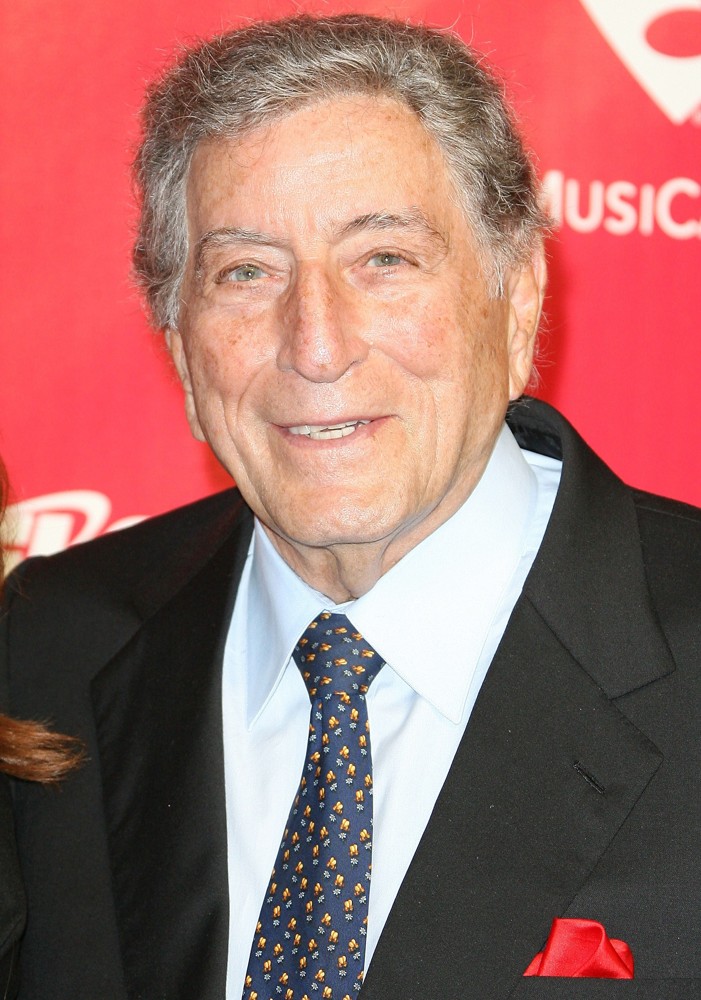
In 1956, Tony Bennett was filmed walking down The Serpentine in Hyde Park, London to his recording of "Strangers in Paradise" playing. This film was distributed to and played by UK and US television stations, leading Tony to therefore claim he made the first music video.
1960
Scopitone is a type of jukebox featuring a 16 mm film component. Scopitone films were a forerunner of music videos. The Italian Cinebox/Colorama and Color-Sonics were competing, lesser-known technologies of the time
Short films were produced by many French artists, such as Serge Gainsbourg, Francoise Hardy and Jacques Dutronc to accompany their songs. It's use spread to other countries and similar machines such as the Cinebox in Italy and Colour-sonic in the USA were patented.
1980
By the mid-1980's releasing a music video to accompany a new single had become standard, and acts like The Jackson's sought to gain a commercial edge by creating lavish music videos with million dollar budgets; most notable with the video "Can You Feel It"
1981
MTV is launched, the first video to be aired is Buggles - "Video Killed the Radio Star"
1984
Michael Jackson's short film Thriller is released, changing the concept of music videos forever. The Making of Thriller home video was also released in 1984. It was the first ever video about the making of a music video.
1996
M2 is launched as a 24-hour music video channel, as MTV has largely replaced with other content.
1999
M2 is renamed to MTV2
Wednesday, 11 September 2013
History of Music Video
Queen's "Bohemian Rhapsody" is considered the first "real" video-clip, in the sense that it was directed and edited for that purpose (you can find related articles if you do a quick search in google). Many Brits consider this the first video because it was the first ever widely aired on British TV
Tuesday, 10 September 2013
ANDREW GOODWIN theory
Key Points;
1 - Relationship between the lyrics and the visuals.
- Themes, mise-en-scene and events of the video match with lyrics of the song, to help to portray the message of the song.
2 - Relationship between the music and the visuals.
- The cuts and edits of the video are in sync with the rhythm and beat of the song matching cuts or effects to specific drum beats or notes.
3 - Music videos have genre characteristics
- Certain features are expected out of a video depending on the genre of the music, for example a girl bands/artists are expected to have dancers and close ups of the singers, whilst a Indi band are expected to have performance shots ofthe band and cut to a fast beat.
4 - Often due to the demands of the record label, artists videos will include many close ups of the artist and will often develop motifs that recur across multiple videos
- This allows the record label to promote a set image for the band, which will help target audiences empathise with the band.
5 - Emphasis on 'looking'
- The 'male gaze' is often used to attract a male audience. The male gaze is a focus on presenting things that appeal to men. This often means a voyeuristic view of, and an objectification, of women. The emphasis on looking also includes the artist looking directly into the camera helping the audience connect with the artist.
6 - Intertexual references.
- Music videos reference other forms of media, most commonly film, but can alos be television and other music videos.
How to analyse music videos;
Andrew Goodwin identifies 5 key aspects of music videos that we, the audience, should look out for;
- Thought beats – Where you ‘see’ in the sound
- Narrative and Performance
- The Star Image
- Relation of visuals to song
- Technical aspects of a music video
‘Thought Beats – ‘Seeing’ the soundStep 1. To look at the music itself. We must take into account the structure of the song.
1 - Relationship between the lyrics and the visuals.
- Themes, mise-en-scene and events of the video match with lyrics of the song, to help to portray the message of the song.
2 - Relationship between the music and the visuals.
- The cuts and edits of the video are in sync with the rhythm and beat of the song matching cuts or effects to specific drum beats or notes.
3 - Music videos have genre characteristics
- Certain features are expected out of a video depending on the genre of the music, for example a girl bands/artists are expected to have dancers and close ups of the singers, whilst a Indi band are expected to have performance shots ofthe band and cut to a fast beat.
4 - Often due to the demands of the record label, artists videos will include many close ups of the artist and will often develop motifs that recur across multiple videos
- This allows the record label to promote a set image for the band, which will help target audiences empathise with the band.
5 - Emphasis on 'looking'
- The 'male gaze' is often used to attract a male audience. The male gaze is a focus on presenting things that appeal to men. This often means a voyeuristic view of, and an objectification, of women. The emphasis on looking also includes the artist looking directly into the camera helping the audience connect with the artist.
6 - Intertexual references.
- Music videos reference other forms of media, most commonly film, but can alos be television and other music videos.
How to analyse music videos;
Andrew Goodwin identifies 5 key aspects of music videos that we, the audience, should look out for;
- Thought beats – Where you ‘see’ in the sound
- Narrative and Performance
- The Star Image
- Relation of visuals to song
- Technical aspects of a music video
‘Thought Beats – ‘Seeing’ the soundStep 1. To look at the music itself. We must take into account the structure of the song.
Step 2. The voice of the song. The artists voice is extremely unique and can form indentificatio or trademakrs that work well with the star image. Roland Barthes theory of the Grain of voice can be related to this. He sees the singing voice as an expressive instrument and therefore able to make associations of its own.
Step 3. Goodwin points out the artists mode of address. Songs can be seen as stories and the artist the storyteller, making the music video a two communication device – them telling us a story and we listening.
Narrative & PerformanceSongs fail to give us the complete narrative.
We only tend to get a gist of the meaning of the song and then tend to make up our own idea of what is being told – An negociated view of a text.
Goodwin explains that music videos should ignore common narrative. It is important in their role of advertiseing.
Music videos should coherent repeatability. Narrative and performance work hand in hand its make it easier for the audience to watch over and over without loosing interest.
The artist acting as both narrator & participant helps to increase the authenticity however the lip sync and other mimed actions remains the heart of music videos. The audience need to believe this is real.
‘Star Image’The star image is another vital aspect of music videos. Meta narrative which is a big story that describes the development of the star over time, it has an important part to play in the music video production process.
Relation of Visuals to the songthere are three ways in which music videos work to promote a song;
image
Technical AspectsTechnical aspects hold the music video together through use of camera work, movement, angle, mise-en-scene, editing, sound and special effects.
Speed, camera movement, editing, cutting and post production are all forms of use of camera.
Lighting and colour help set moods and emphasise key movements of the song for dramatic effect.
Mise-en-scene, the setting of music videos is vital, it needs to look authentic to attain professionalism.
Beats, music videos use cuts to go with the beat or rhythm making the video more entertaining.
Speed, camera movement, editing, cutting and post production are all forms of use of camera.
Lighting and colour help set moods and emphasise key movements of the song for dramatic effect.
Mise-en-scene, the setting of music videos is vital, it needs to look authentic to attain professionalism.
Beats, music videos use cuts to go with the beat or rhythm making the video more entertaining.
CAROL VERNALLIS theory
Carol's theory centres around 4 key concepts that all relate to the way the music video is constructed:
- Narrative
- Editing
- Camera movement and framing
- Diegesis
- The video is a visual response to the music
- There is not necessarily a balance between narrative and performance
- The narrative is not always complete - it may be a partial, fragmented narrative
- The structure of the video may appear disjointed
- There may not always be a clear resolution (closure) at the end
- The video may pose questions that it doesnt actually answer
- Editing may match the musical phrases or the beat
- The video may break or disrupt many of the 'rules' of continuity editing - this is a clear convention of music video editing
- Editing may become foregrounded - the edits may be really obvious, to draw attention to themselves as opposed to invisible, continuity editing
- Jump cuts
- Breaks of the 30 degree rule
- Breaks of the 180 degree rule
- Cutting against the movement
- Cutting within the lyrics
- Graphic matches
- Fancy edits or cuts
- Extreme jumps in time and space
- Extreme changes in pace
- Juxtaposed frames
- A style of editing that runs through the video and is distinctive to that video
- An even pace throughout
- Matches on action
- Smooth transactions
- When it comes to shot types, extremes are very common
- The camera may move in time with the music
- The master shot (or other establishing shots) is used frequently, as are close-ups
- The camera may move on lyrics
- The style of framing and movement may run through the video and is distinctive to that video
- The diegesis may be revealed quite slowly
- Actions are not necessarily completed - they might be disrupted or interrupted in some way
- Some frames may be more important
- Character or object movements may move to the music
- There may be gaps in the audience's understanding of the diegesis - in time and space, music, performance and narrative
Subscribe to:
Posts (Atom)